Is "Near Me" Still Relevant for SEO?
Is “near me” still relevant for SEO in the health & wellness industry? When building an SEO strategy for a health and wellness business in Toronto or other cities, targeting local search terms is crucial-but do you really need to include phrases like “somatic therapist near me”,“registered dietitian near me”? or “acupuncturist near me?” With evolving algorithms and smarter location detection, it’s worth reassessing the role of these keywords in your content.
Understanding Local Search Without Relying on "Near Me"
Google and other search engines have become highly sophisticated in determining user intent. While “near me” keywords once played a key role in local SEO, they’re no longer essential.
This is simply because location-based search results are influenced by your device’s IP address, GPS, or browsing behaviour. When someone searches for “chiropractor” in Toronto, Google will often show nearby options even if the phrase “near me” isn’t used.
Instead, location relevance and consistency matter most. Optimizing your website with city or neighborhood-specific content-like “massage therapy in downtown Toronto”,“top-rated nutritionist in Mississauga”, “best-rated therapist in Scarborough”-provides clear geographic signals to search engines without sounding forced.
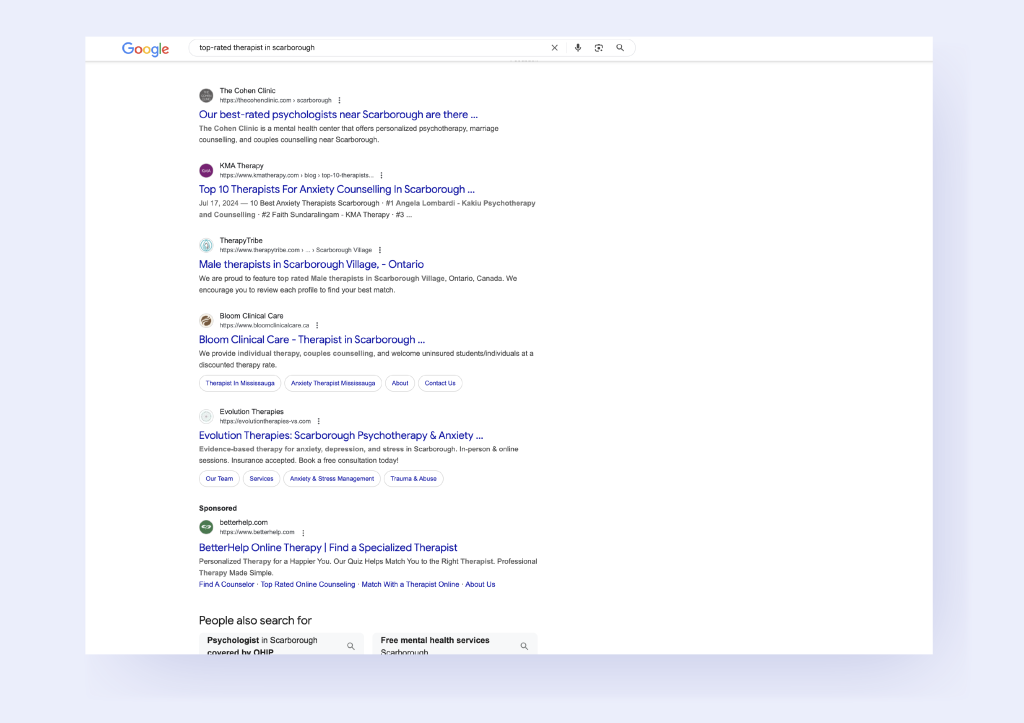
Fig: Top-Rated Therapist in Scarborough Search Results
5 Best Practices for Local SEO in Health & Wellness
Instead of trying to stuff keywords or use “near me” into your content, focus on a holistic local SEO strategy:
1. Use Geographic Modifiers Naturally
Instead of repeating “near me”, use precise and relevant terms like:
- “Affordable online therapist in Scarborough”
- “Experienced dietitian serving North York”
- “Online doctor prescription North York”
- “Prenatal yoga classes in East Vancouver”
- “Mindfulness-based stress reduction in West End Toronto”
- “Virtual therapy for neurodivergent women in Halifax”
These phrases provide the same local relevance while sounding more natural.
2. Create Location-Specific Pages
If your clinic serves multiple areas (e.g., Toronto, Vaughan, or Brampton), develop dedicated landing pages for each. Example:
- “Pediatric therapy services in Etobicoke”
- “Mental health counseling for teens in Markham”
- “Anti-inflammatory diet programs for families in North York”
- “Thyroid and hormone optimization in Oakville”
3. Optimize Your Google Business Profile
A well-maintained Google Business Profile (GBP) is essential for local visibility. Ensure your NAP (Name, Address, Phone) is accurate and consistent across platforms. Add high-quality photos, update business hours, and encourage client reviews. You should aim for at least 20 Google reviews to make a local SEO impact.
Don’t have a Google Business Profile, yet? You can set up a profile here.
NEWSLETTER
Content useful to you?
Opt-in to get more website tips straight to your inbox.
View our privacy policy to learn more about your data.
4. Incorporate Local Schema Markup
Adding Local Schema Markup to your website helps Google associate your business with a specific location because you’ve given it more information to work with. The code can include details like:
- Business name
- Address
- Phone number
- Business type
- Geo coordinates
- Opening hours
Place this as HTML code in the header of your homepage or contact page for best results.
5. Publish Localized Blog Content
Blog posts with location-specific topics improve authority and SEO. Examples:
- “How to Choose the Right Chiropractor in Toronto”
- “Top 5 Questions to Ask Your Therapist in Vancouver”
- “Pilates vs. Physio: What’s Right for You in Calgary?”
- “The Best Resources for Anxiety Management in Downtown Toronto”
- “Top Nutrition Tips for Busy Professionals in Downtown Toronto”
- “Seasonal Eating in Montreal: What Your Nutritionist Wants You to Try This Fall”
- “5 Signs You Might Have a Hormonal Imbalance (and Where to Get Help in Ottawa)
- “How to Stay Healthy During Toronto’s Long Winters”
Final Thoughts
While “near me” may still appear in some voice searches, it’s no longer necessary to build your entire keyword strategy around it. Google can infer proximity without it, so prioritize natural language, user intent, and location-specific signals instead.
For Canadian health and wellness professionals, focus on strong local SEO tactics, including schema markup, Google Business Profile (GBP) optimization, and geo-targeted content. Avoid keyword stuffing, and ensure your website meets potential clients with the right message-right where they’re searching.